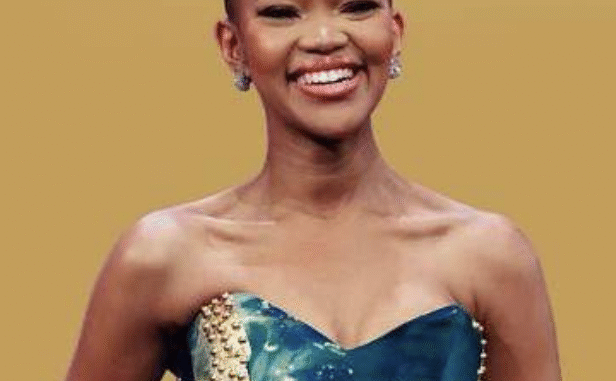
Qhawekazi Mazaleni is a 24 year old up-and-coming leader of Gonubie, East London, the new generation of South Africans whose an ambition is based not on the self-interest, but on the service, cultural pride, and the change in education of people. She resides in Sundowner, Randburg, and her academic achievement, involvement in communities, and her strong interest in lingual inclusion allow her to become the advocate of the literacy and speech growth of children representing different communities.
Qhawekazi has a Bachelor of Speech, Language and Hearing Therapy at the Stellenbosch University, which is among the most competitive programmes in the country. She is a passionate person as she likes to learn about communication to its fullest extent socially, culturally, politically, emotionally; therefore, she is pursuing her Master of Arts in Speech-Language Pathology at the University of Pretoria, majoring in Autism. She explains that her profession is not just a profession but a calling as she is able to help children and families in the most crucial points of their development and has to deal with the linguistic complications of South Africa.
Her early curiosity was developed by growing up in a multicultural family. Qhawekazi and her sisters were brought up by their mother (originally Sotho community, a clerk at the Department of Education) and father (Xhosa-speaking manager at Eskom) in the home where language, culture and identity were proclaimed on a daily basis. Despite the fact that the family mainly spoke isiXhosa, she was exposed to other forms of linguistic traditions and this may have been her initiating factor, as in the future, this interest would be her scholarly direction.
Her pageantry debut was in Beaconhurst High School where she competed in a school beauty pageant and she was crowned First Princess. Such early lessons influenced her choice to participate in Miss South Africa 2025 because she became one of the final 10.
To Qhawekazi, Miss South Africa is not merely a national pageant but it is a movement that fosters leadership, development and service. Pageantry is something that she thinks teaches women endurance, perseverance, courage to be both strong and graceful in leading. More to the point, she feels that being represented in such places as Miss SA can enable young girls to find themselves mirrored and confirmed and challenged to think outside the box. She says that young women do not necessarily have role models in their respective communities. The representation is what allows them to dream.
The key element of the mission of Qhawekazi is to overcome cultural and linguistic barriers in the organization of speech therapy. During her training as an academic, she has experienced how the South African families struggle when therapeutic tools are not tailored to fit their cultures or in languages that they understand. Not only is she trying to promote a clinically correct approach but also a culturally significant approach. Her practice is to interpret the factors of inequality, politics, and language dynamics in society and apply it in therapeutic practice.
She loves telling stories and as a result, she wrote and published a children book in isiXhosa, which is aimed at assisting young readers to master reading, counting and developing early literacy bases. The most satisfying aspect of her work has been watching children as they interact with her book and react to common language and cultural indicators. It once again confirmed her that early childhood development, as a whole, and literacy in particular is among the most potent instruments in the breaking of generational boundaries. She dreams to spread this project into a larger project, one that would encourage children in underserved communities to read stories that could help them identify themselves with their communities and the daily experiences they have.
Qhawekazi is particularly keen on the importance of storytelling in the unification of South Africans. She also thinks that stories are a bridge in a country where there are many languages and history, and cultures, as they help people to understand one another and be a part of the same world. By instigating her mission to make more books available to more people, she is hoping to amass stories that celebrate the cultural heritage of South Africa and the future generation will be proud of their diversity.
Although Qhawekazi is successful, she is still one of them and knows what her colleagues are going through. According to her, lack of hope among the young South Africans is the biggest problem that is facing them today. Many young people are not afraid of dreaming because of the high unemployment, poverty and crime. One of the reasons she entered Miss South Africa was to apply the event to the reconstruction of hope- by demonstrating that wrong goals, enthusiasm and determination can transform destinies.
Given a chance, she would love to start teacher and parent workshops in the under-resourced communities. These forums would examine low-cost learning materials, how to distribute or make learning materials, and how to promote early literacy and communication processes in children. She envisioned the South Africa of the future and education is community-based, cultural, and available to all children irrespective of their background.
Her message to young girls and women throughout the country is easy:
Dare to dream, know thyself, and unsparing in following thy purpose.
Outside her work, Qhawekazi is a young energetic woman having diverse interests and pleasant personality. She has been to the first half-marathon last year, she makes her own clothes and she is in love with the natural beauty of her favourite province, Mpumalanga. The main aim of her life is to influence the education policy in South Africa and to someday see the Northern Lights. She looks up to actress Gale Mabalane who is authentic and American actress Keke Palmer who speaks with her voice with boldness and non-apologetic. She would invite Ms. Lauryn Hill to have lunch and discuss passion, purpose and discernment with her.
Her favourite book is The Alchemist that she is reading the fourth time. She loves chocolate mug cakes, chilli beef stew with amadombolo, the office, Modern Family, and Grey, and repeats of Isitifiketi by Jabulile Majola. She holds the journal as the most valuable object that she has in 2019-2022 and feels that honesty is the most valuable element in friendship.
Everything Qhawekazi Mazaleni does, whether at school, in the arts or in civic life, is an impetus to remember that purpose, learning and cultural pride are potent instruments to make a change. She is the hope of a new generation and her career is just starting.