
Born, raised in Gqeberha (Port Elizabeth) in the Eastern Cape, Mandisi Dyantyis is a highly talented contemporary musician in South Africa, and is renowned due to his unusual capability of blending jazz, African traditional music, choral arrangement and soul-inspiring narration. Mandisi is a trumpeter, vocalist, composer and producer who has created a sound that is grounded in the rich spiritual heritage of the Eastern Cape and has adopted the improvisational liberty of jazz. His music encumbers the memory, culture, experience lived, and he has done so with a sincerity that has made him extremely respected both within and without the borders of South Africa. He is also well known by his warmth, humility and generosity of heart which have not only caused him not only to be a performer but also a custodian of South African musical tradition.
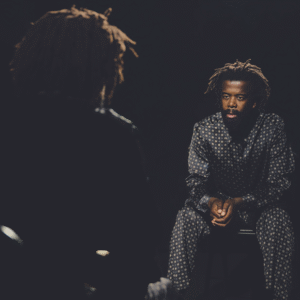
The background provided to Mandisi when he was growing influenced him to have the first musical experiences. Eastern Cape has always been prime soil of choral excellence, spirituality and story telling, and these were the things that enveloped him at a tender age. He was brought up in a family and surrounding where music was an element of day-to-day life- church songs, choral practices, ancient performances and assemblies that were filled with melodies and beats. Consequently, he was nurtured up deeply in spiritual music, imbibing melodies and vocal culture that went on to transmit culture over many generations. This foundation would later be a grounding of his art identity.
He started singing and playing trumpet when he was young and soon demonstrated a remarkable natural talent. His genius was balanced by his discipline; he would take hours to practice and learn how music works bringing him good technical grounding. This training later on saw him at the University of Cape Town, South African College of Music where he attended classes in classical trumpet and jazz performance. This time broadened his musical horizons and subjected him to the strictness and complexity of classically oriented training and the jazz liberty of improvisation. Here he perfected his art, matured his sense of musical theory and had the courage to seek out a more personal artistic direction.
Upon graduating, Mandisi got engaged in the music and theatre industry of South Africa. His entire ability enabled him to work as a music director, composer, arranger, and performer in various fields. He worked on various theatre productions, where he has worked with some of the top directors, actors and playwrights in the country. The work helped him to hone his skill in using emotion, using sound to help shape a story, and building atmospheres to help tell a story. His theatre music tended to have the same religious intensity and personal responsiveness with which he would come to identify his solitary music.
His solo music was what brought him national recognition, even though the singer had been a longtime participant in the industry. His first album, Somandla, brought about an old and new sound. The album was a fusion of jazz, Xhosa traditional music, spirituality and heart-thumping lyricism that was performed using his very unique warm voice. The messages of the album, which included hope, love, loss, family, faith, and collective memory appealed to people. The tone of the voice that Mandisi used on Somandla demonstrated a kind of fragility that is not common to many vocalists, a sense of emotional sincerity that enabled her to make the audience feel that he was singing specifically to them. Mixed with rich horn sounds and subtle acoustic sound, the album placed him as a very strong narrator and a musician of monumental understanding.
He followed the success of his first album with his second one, Cwaka, an album that allowed him to extend his palette as well as to expand his emotional spectrum. Cwaka was praised due to its meditative mood, full harmonies, and lyrical intimacy. It showed a musician who was not afraid to face the nothingness, the nakedness and self-examination. The album was both mourning and healing and provided the audience with an opportunity to review their own and community experience. The skill of Mandisi to respect the tradition and at the same time experiment with modernity attracted critical attention and established the presence in the South African contemporary music. His work was a type of comforting companion during the hardships, and most importantly in the pandemic years, when his voice was a source of relief to many.
Outside the studio, the live performances of Mandisi have taken the status of a legend. When playing with a full band, a jazz ensemble, or simple intimate acoustic shows, he has made an atmosphere that is spiritual, immersive and very human. His concerts have been said to be more of a gathering than a show-grounds where people feel united, inspired, and emotionally renewed. His trumpet solos are flying between worlds, some sunny and jubilant, others sad and thoughtful. With a warm and textured voice, he can convey sincerity in his voice which the audience can identify. After his plays, people tend to be left with a feeling that they have witnessed something holy.
The difference between Mandisi and the rest is the manner in which he incorporates storytelling in all his music. Songs by him can be viewed as a reflection of life experience- Family memories, everyday life struggles, future hopes and the resilience of the human spirit. With his vulnerability he rarely sees, he sings about love, loss and healing. His lyrics have the rhythm of the Xhosa poetry, the familiarity of prayer and the burden of ancestral memory. These emotions are reflected in his trumpet playing which serves as the second voice that rounds out the story.
Mandisi is also influential through his mentorship and leadership. He also believes in the development of young artists, encourages creative programs in the communities and promotes the preservation of South Africa musical heritage. This can be seen in his contributions in the field of education and community enrichment as he believed that music is not just a form of entertainment but a very vital cultural tool which molds people, heals wounds and preserves identity.
However, Mandisi does not lose touch with reality, even though he is becoming more and more famous. He still expresses modesty, sincerity, and thankfulness in all the places he goes. He is not shy to talk about personal development, emotional issues, and the necessity to remain in touch with the roots. Such frankness makes him even more popular among viewers who observe his art and his humanity.
Mandisi Dyantyis is one of the most significant voices in the South African music today. His artistic work is genre and category defying, with jazz, spirituality, indigenous culture and emotional storytelling all coming together to create a sound that is his own.
Here are the song titles
- Uxolo!
- Sizonyamezela
- Kusenokwenzeka
- Sul’amehlo
- Ndim! Lo!
- Undijongile
- Ndonwabile
- Othandwa Ndim
- Amyoli
- Uhambo Masigoduke
- Basuka
- Shiyiwe
- Umthandazeli
- Thandaza
- Siphile
- Sonwabe
- Siyabizwa
- Ungancami
- Ndiyakholwa
- Ziyafana
- Xola Ntliziyo
- Isithandwa Sam
- Ndixolele
- Cwaka
- Isigidimi
- NguMama
- Mabaphile
- Isikhalo
- Zamile
- Ndibonis’indlela
- Impumelelo
- Umbuliso
- Grandmothers Dance
- Kode Kube Nini
- Ndimthanda
- Molo Sisi
- Somandla
- Ingoma Yenkedama
- Esazalwa Sinje
- Because You Knew
- I Search
- Olwethu
- Iinzingo
- Kuse Kude
- Molweni