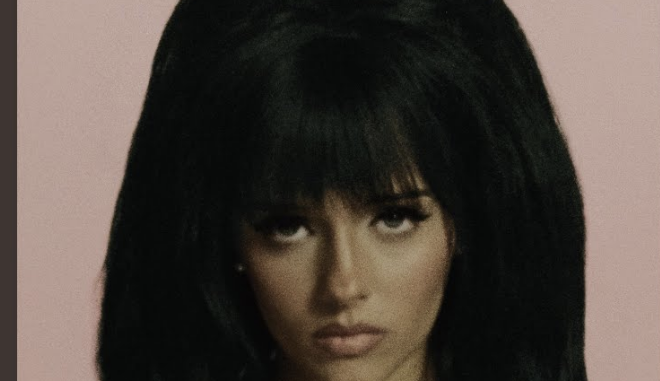
Sometimes a song comes out that everybody starts talking about. In 2025, a singer named Jessie Murph released a song called “1965” and made a music video for it. The video became very famous, but not because everyone loved it. It became famous because many people were upset by it. This is the story of that song and video, told in a simple way so you can understand what all the fuss was about.
Who Is Jessie Murph?
Jessie Murph is a singer from Alabama in the United States. She was 20 years old when she released this song. She has been making music since she was a teenager. Her songs mix different styles together. Sometimes her music sounds like country music. Sometimes it sounds like pop music. Sometimes it sounds like hip-hop. She does not like to be put in one box.
Before “1965,” Jessie was best known for a song called “Wild Ones” with a singer named Jelly Roll. She also had a hit called “High Road” with Koe Wetzel. A song called “Blue Strips” did very well on the music charts. That song was about a woman who goes to a club and tips money to a dancer. It was a bit naughty, but people liked it.
Jessie is known for being honest in her songs. She sings about feelings like anger, sadness, and love. She does not pretend to be perfect. Many young people like her because she feels real.
What Is the Song 1965 About?
The song “1965” is about a woman who is treated badly by her boyfriend or husband. She feels so sad and tired of being treated poorly that she starts wishing she lived in the past. She sings about the year 1965. In 1965, life was very different for women. They had fewer rights. They were expected to stay home, cook, clean, and obey their husbands.
The most famous line of the song is when Jessie sings, “I think I’d give up a few rights if you would just love me like it’s 1965.” She also sings about getting a “slap-slap” but says at least back then, nobody would post it on social media.
Jessie said later that the song was meant to be a joke. She was not serious about wanting to give up her rights. She was trying to show how silly it is to wish for the past. The past was not better for women. It was worse. But the way she sang it made some people think she was serious.
The Music Video
The music video is what made everyone so angry. A music video is like a short movie that plays while the song is on. Jessie made her video look like it was filmed in the 1960s. Everything has a grainy, old-fashioned look. She wears pretty dresses and does her hair in old styles.
In the video, Jessie plays a housewife. Her husband is an older man. He does not treat her very well. He ignores her. He walks off with another woman. The video shows Jessie looking sad and trapped.
Then things get very grown-up. There are scenes that are not for children. The husband and another woman are shown in a bedroom doing things that adults do in private. A young girl hands Jessie a tablet device right before this happens. This upset many people because a child should not be near scenes like that.
Jessie is also shown tied up with something covering her mouth. She is sitting on a couch. At one point, a woman is shown hiding under a dinner table near a man. At the end, Jessie puts a gun into her husband’s mouth to get revenge.
All through the video, people are smoking cigarettes. The whole thing feels dark and uncomfortable to watch.
Why People Got Upset
Many people watched this video and felt shocked. They took to social media to say how they felt.
Some people were upset because the video shows things that are not appropriate for young viewers. YouTube is a website that children can easily visit. Some parents worried that kids might see the video by accident. The video had to be age-restricted, which means you have to prove you are an adult to watch it.
Other people were upset about the message. They thought Jessie was saying that women should go back to a time when they had fewer rights. This made people angry because women have fought very hard for the rights they have today. In 2025, some of those rights were being taken away again in America. So the song felt very tone-deaf to many listeners.
People also did not like that a little girl appeared in the video right before a bedroom scene. They felt it was wrong to put a child so close to adult content.
Videos on TikTok and YouTube were made with people saying they could not believe what they had watched. One person wrote, “Somebody please tell me this is a joke.” Another said, “Why would anyone make something like this?”
What Jessie Said Back
Jessie quickly went on TikTok to explain herself. She said the whole song was satire. Satire means making a joke by pretending to believe something silly or wrong. She said, “The entire song is satire. Are you all stupid?” This was not a very nice way to explain things, and it made some people even more annoyed.
Later, she gave a nicer explanation to a magazine. She said, “I do not actually want to give up my rights. I love having rights. Specifically for women. Bodily rights specifically.” She said she had been watching old movies from the 1960s and noticed that everything looked romantic on the surface, but it was actually a fake fantasy. She was trying to show that the past was not really better.
She also said that the line about wanting to give up her rights was not something she actually believed. She was just playing a character in the song.
Did People Accept Her Explanation?
Many people did not accept her explanation. They said that if a joke needs to be explained, it is not a very good joke. One person wrote, “It is not satire if people do not get it.” Another said, “Satire is not a get-out-of-jail-free card,” meaning you cannot just say something mean or harmful and then claim it was a joke.
Some people did defend her. They said that Jessie was actually making fun of women who romanticize the past. They argued that the video was meant to be shocking so that people would pay attention and think about serious issues.
The video continued to be watched millions of times. At the end of 2025, Google reported that it was one of the most searched music videos of the entire year. Whether people loved it or hated it, they could not stop talking about it.
What Can We Learn From This?
The story of Jessie Murph’s “1965” music video teaches us a few important things.
First, it shows that artists sometimes try to make a point by being shocking. They want to grab your attention. But being shocking does not always work the way they hope. Sometimes the shock is so big that people miss the message.
Second, it teaches us about satire. Satire is a tricky thing. For satire to work, the audience has to understand that you are joking. If they think you are being serious, the joke fails. This is what happened with “1965.”
Third, it reminds us that context matters. The song came out at a time when women’s rights were a very serious topic. Many people were not in the mood to joke about giving up those rights. The timing made the joke feel hurtful instead of funny.
Finally, the story shows how powerful social media can be. One day, nobody was talking about this video. The next day, millions of people were sharing their opinions, making videos, and writing comments. The internet can make something famous overnight, but that fame is not always positive.
Conclusion
Jessie Murph’s “1965” music video was one of the biggest talking points of 2025. It angered many people, confused others, and sparked debates about art, jokes, and what is okay to show in a music video. Jessie said she was trying to be funny and make a point about the past. Many people felt she missed the mark.
The video is not appropriate for children. It contains grown-up scenes and themes that are meant for adults only. But the story behind the video is something even young people can understand. It is about how art can be powerful, how jokes can go wrong, and how important it is to think carefully about the messages we share with the world.
Whether you think Jessie was brave for pushing boundaries or silly for causing so much upset, there is no doubt that she made something unforgettable. The world will be watching to see what she does next.