
Vusi Egon Matlala, known in South Africa as Vusi “Cat” Matlala, born on November 3, 1976, in Ermelo, Mpumalanga. Being brought up in the small town in the last years of apartheid, his childhood began in the surroundings of racial segregation and economic inequality. Information about his parents and siblings is confidential hence giving a certain air of mystery to a person who will, in future, take up the headlines due to his riches and scandals. The way Matlala was brought up made him a man sensitive to opportunity, ambition and the art of going through the mazes in a changing South Africa.
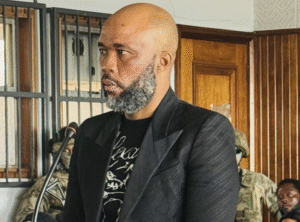
Details regarding Matlala and his or her formal education are limited and there is no record of degrees and schools Matlala attended in public. His success to riches seems to be mostly self-made, based on the street experience of doing business and not being trained. Such absence of traditional educational qualification did not slow down his ascendancy as there was the capacity of some entrepreneurs in post apartheid South Africa to make their own way.
Matlala has as a wife a socialite, Tsakani Matlala who has highly rated profile in social elite circles in South Africa. They have children together but their identity is a secret. The family life of the couple, which was comparable to success, has been put in the shade of the legal complications.
Matlala was a famous enjoyer of lavish life, including expensive cars such as Rolls-Royces, fancy clothes, travelling around the world and a mansion in Pretoria with huge expenditures. It also gave him money to rent penthouses on the exclusive building and host high profile clients such as former Police Minister Bheki Cele. However behind the gild, there were stories of unpaid workers and financial malpractices that were showing signs of cracks in his empire. The name Cat is his nickname, which denotes an elusive character who knows how to move, in terms of wealth, power and influence.
Matlala began small in his entrepreneurial life by undertaking small municipal contracts in Gauteng and Mpumalanga. He started and ran a number of businesses which included Falcon Cat Trading, Black AK Trading, and Cor Kabeng Trading, which dealt with health services, supplies and government tender. These initial projects, despite being low profile, established the basis to his future success.
The breakthrough of Matlala was in 2024 when one of his companies, Medicare24 Tshwane District, won a R360 million contract to supply health services to the South African Police Service (SAPS). This transaction propelled him to the national stage earning him the title of a tenderpreneur. Although it demonstrated his skills in networking and business, it also cast doubt on the fact that a man with no credentials would enter such a contract worth a great deal of money.
The jewel in the crown was Medicare24 Tshwane District which, supposedly, made R50 million prior to the cancellation of the contract. His companies were also highly dependent on strategic relationships in the tender system and were therefore subject to investigation and claims of fraudulent activity, fronting, and corruption.
The career of Matlala was marred with a row of lawsuits. The most notable of them is the attempted murder case of actress Tebogo Thobejane that happened in 2023, where the authorities claim that Matlala had organized the attack through WhatsApp instructions to hitmen. He is charged with attempted murder, conspiracy and money laundering together with co-accused Tsakani Matlala, Musa Kekana and Tiego Floyd Mabusela.
Matlala has also been involved in corruption of high profile such as the Tembisa Hospital R3 billion scandal involving Babita Deokaran, a whistleblower involved in the scandal who was murdered.
Matlala has lost his reputation in a very dramatic way after being hailed as an entrepreneur. His business operations were hurt by the cancellation of the SAPS contract in 2024, and the perception of people changed, and he became an icon of systemic problems in the tender system of South Africa. Even such minor incidences like the carrying of a cellphone to prison, strengthened the discourse of a diminished empire.
His wealth was underscored through lavish cars, mansions, designer wardrobes and international travel. Nevertheless, constant court cases, asset confiscation and unpaid creditors have greatly brought down his financial situation.
It is not clear what lies ahead of him, and legal proceedings and press attention remain the storyline. The fact that the tenderpreneurial highs had been replaced by the consideration of some serious criminal charges is a perfect example of how dangerous wealth in politics and corruption can be.
The life of Vusi Cat Matlala is a melodramatic account of ambitions, fortune and scandals. Having climbed his way to the top as a tenderpreneur due to his humble roots in Ermelo, his career path outlines the potential of the post-apartheid economic environment in South Africa as well as its threats. Although his legal misfortunes and corruption accusations have redefined his legacy, his story is a valueless lesson on power, influence, and responsibility in contemporary South Africa.