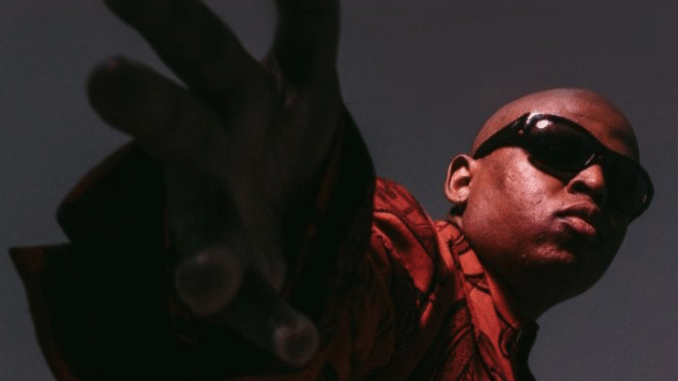
Since Durban townships to club stages the world over, QUE DJ, born Thobani Que Mgoghozi, continues to push the sound of Gqom. His latest album, We Don’t Play the Same Gqom 3 (WDPTSG3), is the next groundbreaking part in a sequence of albums that have continuously questioned what Gqom can become, and extended its sway significantly beyond South Africa.
Que first came into fame with Distruction Boyz (along with Goldmax). The pair assisted the Gqom to become part of mainstream dance music history by putting hits such as Omunye and the production of Wololo on behalf of Babes Wodumo in township house parties. The success itself did not only win them awards and recognition but it contributed to establishing the time when Gqom became a national phenomenon.
But Que had no ambitions of that kind. As his 2020 EP We Don’t Play The Same Gqom, the first in this series, was released, he indicated he was going back to raw, heavy-bass, underground Gqom, which he identifies as Umkhunkulu. That was a statement: Gqom does not have to water down to remain topical. It can evolve.
Now we have WDPTSG3, Que demonstrates to us the extent of the evolution. His new project has its foundation on his origins, but it stretches the limits of the sound of Gqom – tortured-township grit into the world-dance-floor-ready multiplied energy. The album was supported by a global campaign: a release at Amsterdam Dance Event (ADE), international performances (including performing at such venues as Amsterdam Paradiso and London Village Underground) and a new effort to introduce Durban sound to the rest of the world.
It is not only the global ambition that makes WDPTSG3 different, but musical vision. Que also experiments, remixes, reimagines Gqom with new textures and atmospheres, but still pays tribute to the roots of the genre: heavy-bass and hypnotic. He has other producers backed through his alter-ego project, and through his record label/platform collective Amagogogo Sounds, in which Gqom is not only surviving but expanding, diversifying, evolving.
To those fond of the original vibe of Gqom – followed by its initial spirit; raw, minimal, even chaotic – WDPTSG3 will offer them some instances of a dance-floor frenzy, heavy bass drops, and chilling rhythms that will reach into the depths of the genre. To the outsider or international audience, it provides a form of Gqom that is contemporary, rich and festival-futuresque, club-futuristic and streaming-futuristic.
We Don’t Play the Same Gqom 3 is not just another album in every respect. It is a bridge – between generations (township DJs to international stages), between the rough and the smooth, local and global identity. It is evidence that Gqom is still essential, can be reinvented and exposed to the world, but such a direction should be taken by such visionaries as QUE DJ.