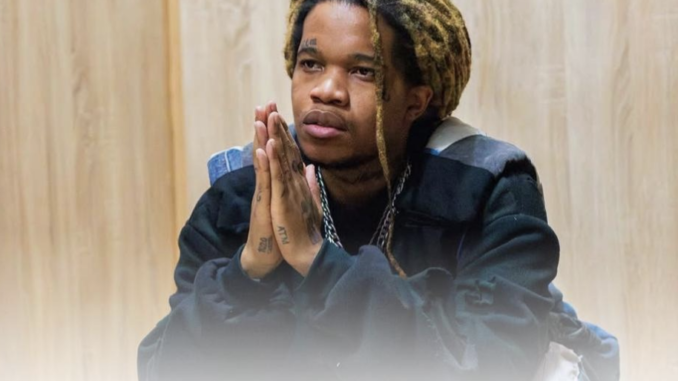
Msotra Don’t Die will be two years old, which means a new generation of discussions about its cultural weight and creative development of Saudi. Released on his independent label on December 1, 2023, the album is a highly personal one and a statement of resilience, creativity, and the new sense of ambition.
Saudi celebrated the event by posting the following message to the fans: TODAY is the birthday of my second baby, it has been two years of #MSOTRADONTDIE. By so doing, he offered the listeners to rediscover the project one more time – to rethink and re-hear what it sounded like when it was initially released. It started as an individual experience but over the years has turned into a collective experience of the fan base.
At the beginning, Msotra Don’t Die was not like the rest. It is a point at which Saudi comes out of a long decision-making time, of recovery and self-understanding. In the given period he reconsidered who he was as an artist, re-examined his intentions and decided to create something genuine and sustainable. The album was the follow-up to what many have called a hiatus – not a break with music, but a break with the limelight. Saud was silent, though, during that period: he was making music, trying out new sounds, and reconsidering what his next step should be.
What it has produced is an 18-track body of work, which is cohesive, but diverse – individually, each track possesses its own emotional and meaning, but when combined as a whole, it creates a larger story. The released track list entails such songs like Father Day, I Still Love you, Roses, Amalunde, I am sorry, 48 glizzy, Carmelias baby, Loyal, Politik, Honest and true, Inyembezi, Trauma, Kwaal, Chose up, Lonke, Pardon me, the prayer and the best performance Nkalakatha featuring Emtee.
The lack of multiple features on the album (only Emtee) provided it with some sort of rough intimacy, it is mostly the voice of Saudi, his own truth. The personal nature of the project is highlighted by that decision. It is either sensitive confessions, meditations of loss and love, or ugly realities of the difficulties of life, the album has emotional integrity and seriousness.
One of the reasons that Msotra Don’t Die continues to survive, why people continue referring to it two years on, is that it is diverse. It can be the music of heartbreak (I’m Sorry), aspiration (48 Glizzy), love (I Still Love You), gratitude (Father’s Day), or introspection (Honest and True, The prayer). Passing through heartfelt philosophical ballads to violent street-rhymes, to optimistic anthems, proves that Saudi is adaptable and does not fail to take numerous emotional journeys without losing any cohesion.
How the album balances mood and message, its atmospheric production, honest lyricism and prudent sequencing that allows the songs to breathe and land has continually topical themes with listeners. There are those that invite a late-night cogitation, and those that were prepared to be energised and intense. The variety of sound makes sure that the album is not going to seem old-fashioned or one-dimensional; to the contrary, it would be more relevant due to its reflective character: life with its ups and downs, hope and hurt, weakness and strength.
Two years later, the songs in the album that were most impactful at the time of release still have power, and in fact, new ones have surfaced, in the eyes of some listeners. The songs such as Kwaal and Nkalakatha are still called upon by the fans; other songs such as I’m Sorry or Inyembezi have acquired emotional gravitas over the years. The timeless nature reiterates the fact that Msotra Don’t Die is not just a series of songs, but a milestone in the history of Saudi, and in many cases an aide to their fans in traversing their own.
It is not only a time to celebrate the past, but also the progress. To Saudi, the album was a new beginning, it was a moment to regain authority (he released it on his label), to establish his identity, to test himself artistically. He explains that being out of the noise is what helped him to recover, study, and be stronger, more focused and more purposeful.
Msotra Don’t Die was also at a point that made many people wonder what has become of South African hip hop- some said that it had lost its flow, others said that it had gone astray. Saudi was defying these narratives by dropping this record. He demonstrated that hip hop is not two-dimensional, it is able to be emotional and it can be about personal and social suffering and still provides hope and hustle.
Today, when the album is two years old, the album is still a point of reference of what an aware and truthful, multi-layered hip hop album can be. It is a survival badge in the case of Saudi, the badge of perseverance, innovation and identity. To the fans, it still stands as a moving piece of work that still remains relevant, complicated, and human.
In the end, Msotra Don’t Die is not a chapter it is a basis. It solidifies an episode in the life of Saudi when the nakedness, the aspiration, and the artistic precision met. As it grows old it becomes textured, meaning and memoreous. When listening to it once more, meditating on lyrics, re-experiencing their own histories – they remind themselves and the artist herself that Msotra did not die. It lives on