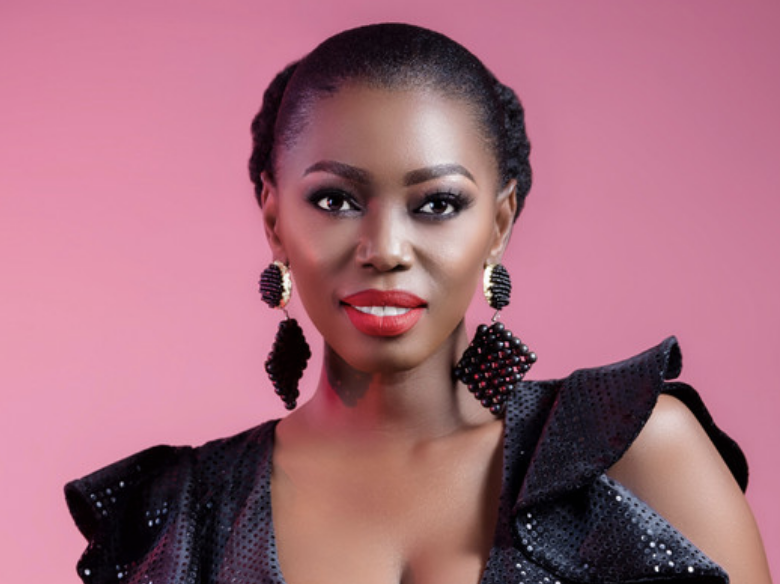
Who Is Lira?
Lira is a renowned South African singer, songwriter and inspirational icon who has ended up becoming one of the most preferred musical personalities in the country. She is a unique voice with inspiring music and a warm presence on the stage and her fame grew in the early 2000s with the sound that merged the Afro-soul, jazz, and R&B. Throughout her over 20-year long career, she has released several successful albums and received many awards and earned a reputation as an artist whose music is characterized by a message of hope, strength, and self-belief.
Lira has earned a reputation as a cultural ambassador and an otherwise recognizable face in the course of her career, as well as her musical success. This adventure took a new twist in 2022 when she had a stroke and was unable to speak, so she had to leave the stage and begin the deepest personal healing. The experience transformed her with her craft, her body and her purpose.
Lira is in the process of preparing her comeback to live performance to intimate solo show, Still Here, that will be staged at the Lyric Theatre, on 18 April 2026. Her vintage is not presented as a re-creation but a commentary on survival, healing, and reclaiming her voice in a new way that she did not expect. One of the most surprising and visible stops in her journey is the surprise that she could sing more comfortably than talk, which has given her music a new meaning and brought her closer to the songs she initially sang many decades ago.
Lira: Childhood and Biography.
Lira was born Lerato Molapo in 1979 in a township of the East Rand of South Africa, which is known as Daveyton. She was brought up in an educated and cultural family where parents nurtured the intellectual and creative aspects in her. Her father (a minister) and mother (a nurse), helped to give her a stable environment at home that focused on discipline, faith, and self-expression.
Lira was interested in music even at a tender age, but she did not start off doing it as a profession. She studied at a performing arts high school where she met music, dance, and drama, but at first she has aspired to pursue business and communication. She subsequently attended the University of Johannesburg where she graduated with a degree in communications, which would later help her in her interpretation of branding, storytelling, and connection to the audience.
The social and cultural shift of the post-apartheid South Africa during her formative years had a certain influence on her sense of identity and the wish to make music that would speak to the hope and promise. Nevertheless, even though she had the abilities, she did not consider herself as an entertainer until in her early twenties when she started trying to compose songs and even train vocals.
Education
Lira was obtained in the formal education system of the South African public school system then she entered the University of Johannesburg and studied communications. Her university life equipped her with the knowledge of marketing, PR and media which were used later in her music career. As opposed to most of her contemporary counterparts who have had formal training in music, Lira has had little training in singing, having acquired skills through practising, performing live and working with producers and musicians.
The academic knowledge in communications allowed her to have a strategic perception of how artists relate with their audiences, a factor that made her successful as an independent artist. She has talked extensively of the fact that her education enabled her to find the business side of the music industry and retain creative control of what she did.
Career and Rise in Music
Lira started her career in the early 2000s at the time when she was insistent on establishing a name of her own without having to subscribe to the major label setups. Her emergence was characterized by an amalgamation of raw talent, strategic independence and a unique sound that made her unique in the South African music industry.
Early Roles
Lira did not start getting into the music industry at once. She then pursued studies in corporate communications after which she was practicing her musical art as a side activity. Out of frustration in being bound by the standard industry patterns of working, she chose to create her own career. She started playing small bars and grew her following by playing live and by word of mouth, and had recorded her first album on her own.
Breakthrough and Key Milestones.
Debut Album All My Love (2003): Lira released her first album which was an independent one and it was a commercial success which earned her several nominations in the South African Music Awards. The album presented her trademark Afro-soul and made her a new voice in the industry.
Feel Good (2006): Her second album made her a major artist. The eponymous song, the title song, was an airing of hope and strength, and the album has gained her popularity throughout South Africa and beyond.
Success in other countries: Lira has since performed in major international festivals, including the North Sea Jazz Festival, and has also worked with other artists like Hugh Masekela. She turned out to be one of the most exported musical talents in South Africa, who could reach different audiences regardless of cultural and language barriers.
Born Free (2016): This album was a decade of her life and touched upon the theme of identity, freedom, and the post-apartheid generation. It was one that was hailed because of musical maturity and lyrical depth.
Lira has received several South African Music Awards and also international awards such as BET Award of the Best International Act among others during her career. Her music has always been marked with messages of self-empowerment, love and perseverance.
Stroke and Recovery (2022-2026)
In 2022, Lira experienced a stroke that put a sudden end to her career. The stroke rendered her incapable of speaking, which was a disastrous result to a singer whose language was her main tool to play with and whose face was characterized by the use of words. She retired and started a gradual and doubtful process of recuperating.
Her early interest was not singing but rather on getting the power to talk in a normal manner again. The speech came slowly back and the trip took time, patience, humility, and the ability to rest–which she had not been able to afford when speech was good. This was the time when she was forced to counter her physical results caused by stress and perfectionism.
The breakthrough came after she realized her ability to sing still existed despite not doing so in a long time. As she drove and listened to Tyla singing the song Water, she found that she was able to sing along with the lyrics. During that weekend, she rehearsed her own songs and realized that it was easier to sing than to speak. Now I sing better than I talk, she afterward thought.
Coming back to singing she has remarked, ended up benefiting her speech. But she has stressed that she was not preoccupied with musical comeback as she healed. She would not have had the rest she required, had she gone back sooner to giving performances, she said. The experience taught her to take her time, listen to her body, and allow the progress to take place without pushing it.
Return to the Stage
The first performance that Lira made after her stroke was a silent but significant one when she appeared at Baseline, the place where she sang stage but was too afraid of talking to people. She was singing but not talking, and verbal communication did not come up until the conclusion of the performance. The experience influenced how she has gone about her comeback to live performance.
She will have a three-hour solo show in the Lyric Theatre in Johannesburg on 18 April 2026 titled Still Here. The show is planned to be a combination of song, dance, and narrative, which will provide the viewers with a more comprehensive understanding of her music and the life story behind its creation. The program is also timed with two other major career milestones 10 years post Born Free and 20 years post Feel Good. In the case of Lira, it is not a comeback but a night of survival, challenges, victories, and perseverance.
New Priorities and Personal Life.
Lira has developed a less distracted more purposeful life since her stroke. Morning is now based on meditation and prayer. She appreciates silence, good habits, and stillness which make her remain in touch with herself. She has explained that the pace of going low has enabled her to take life at a more leisurely pace and be able to hear what her needs are.
She has also been able to consider the way her music has assumed a different meaning after her recovery. Previously recorded songs, like Believer, Rise again and Something inside So strong, all sound quite prophetic these days, as they were composed to help her navigate this chapter. They have been therapeutic to her and helped her to go through the experience and gain emotional grounding.
Her mission she says has always been the same; to inspire people. However, the manner in which she defends herself in that intention has changed. I should not put my life in jeopardy by my purpose, she has said. The balance in between giving to others and attending to herself is what has taken center-stage in her current life and work.
Legacy and Long-Term Impact
Lira has more than her musical catalogue and her legacy. She is considered as one of the most successful and popular artists in South Africa, whose career has passed over the period of more than twenty-five years, penetrating the foreign markets as well. Her music has been hailed because of its capacity to motivate, uplift, and address the human experience in non-genre ways.
Her post stroke and recovery has become an addition to her legacy. The experience has made her life and art closer together instead of eroding her career. It has brought her out with a new image and an identity developed not through performance but through experience. Her readiness to be candid about the issues involved in the recovery process, the burden of stress, and the need to get a rest has made her all the more relatable to audiences who are able to see in her narrative a mirror of their own in the struggles with resilience and self-care.
She is not remembered just in music alone, but how she has handled the adversity with grace, honesty and how she has stayed true to herself in the long-run. It is a story of endurance, recovery, and the silent forces of showing up not as a perfectionist, but as a person who has not yet mastered everything, who still has wounds, and who still exists.
Questions and Answers (FAQ) Lira.
Who is Lira?
Lira is a South African singer, songwriter and inspirational figure who has been singling out the Afro-soul sound, uplifting music with a career span of over two decades.
What is her full name?
Her real name is Lerato Molapo.
Where was she born?
She was born in Daveyton which is a township in the East Rand of South Africa.
What happened to Lira in 2022?
She was struck and could no longer talk and she had to take a break in performance and start with a long process of recovery.
Can she still sing?
Yes. As she was recuperating, she found that she could sing more easily than talk. She has learned to sing than to talk.
Is she performing again?
Yes. On 18 April 2026, she will give a three-hour solo show at the Lyric Theatre.
What is Still Here about?
The performance is a mix of songs and dances with the story of her recovery, her professional achievements and her survival story. It commemorates 10 years of her album Born free and 20 years of feel good as well.
What has she told about her recovery?
She has talked about the need to learn to relax, take time and listen to her body. She also has pondered on how the stroke made her something that the stress and perfectionism had done to her.