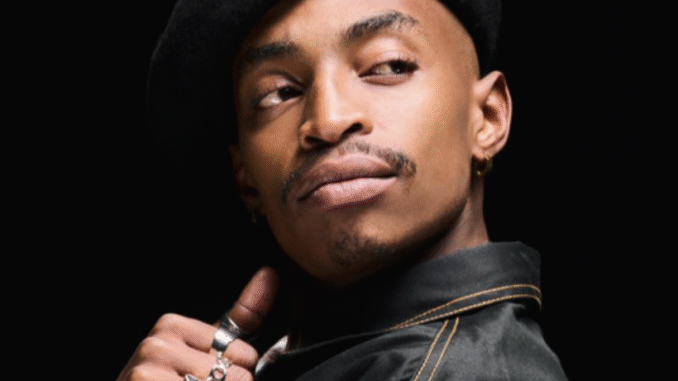
LeeMcKrazy grew up and was born in Diepkloef Zone 5, Soweto. The music was involved in his life since his childhood, as his mother used to take him to church and he used to sing in choir since his childhood. It was the exposure of him to song, harmony and performance at a tender age that predetermined his future. He was also sportive as he was growing up: joining the young squad of a large soccer club, however, his interest in music turned out to be stronger. Sometimes he plays jokes that, though he tried football, it was music that found him, and that it would not release him.
LeeMcKrazy started taking music investment seriously after 2015 (when he was in his teens). He began writing and performing, becoming a balance between his ambitions and regular life, and gained confidence over time. This was helped along by his choir training, and vocal discipline: where other vocalists might be club based or DJ house based, he was church and community choir based, that gave him a grounding in soulful melody that would later serve the new sound of Amapiano well.
His debut happened with the song “Eloyi” – a collaboration with already known people that merged soulful vocals with Amapiano rhythms. The song soon went viral, accumulating streams and receiving exposure. That success was a turning point: LeeMcKrazy was no longer a young singer who had a dream, but a famous musician in the Amapiano community.
It was then that he took up the wave and started releasing more music. As the years have passed, he has developed a trademark sound; the soulful and smooth vocalist; full-of-heart melodies and an ability to produce tracks both club ready and deep-thinking. His versatility, which allows him to switch between bubbling dance-floor hits and melodic, heart-to-heart pieces, has made him attractive to his large audience.
The more popularity LeeMcKrazy gained, the more he was associated with being an authentic person. Although the fame has increased, he tends to remind people that he has never forgotten his background. He calls himself just LeeMcKrazy the same kid as Soweto and he remains down to earth despite his music being played to wider audiences. That modesty appeals to most fans, particularly those who can see in him a success story based on actual life and actual struggle.
In 2024, and with his continued growing acclaim, LeeMcKrazy released his second album (or major project) Intando Ka God 2.0, a body of work that many would say to be a statement of musical, emotional, and thematic growth: the album itself is widely seen as an indication of maturity. He demonstrated development through that release, not by sticking to the same formula, but by playing with his vocal range, working with various producers, broadening his sound arsenal to capture new influences and his own development.
Meanwhile, LeeMcKrazy has continued to be prolific in terms of collaborations. He performs as a feature artist with other singers and producers, appearing in tracks throughout the Amapiano and Afro-house scene, showing his multifaceted and flexible nature. His style and voice, which are based on soulful singing, precondition his desirable collaborator.
In addition to the studio, LeeMcKrazy has recently begun to give one man shows, concerts about him. To a lot of the South African music enthusiasts, these concerts indicate that his fame is soaring: township performances to performances where his name itself is enough to attract crowds. During interviews he explained how the first time he felt to be truly famous was when people would fill the venue just because the name was on the list. This was what he called making everything real.
Although successful and popular, LeeMcKrazy has also come out to discuss the negative side of fame: a lack of privacy, increased expectations, the necessity to hit it big all the time. However, he insists that the struggles are not his biggest asset, his origin and genuineness are. He constantly claims that people want luxury, bling, and grandiosity whenever they see an Amapiano star, yet he has not lost his sense of reality or the way he is. He identifies himself as a pantsula -with references to township origins and the daily hustle, not the celebrity identity.
The career of LeeMcKrazy is on the increase as of 2025. He juggles capturing new music, partnerships, live performances and developing a fanbase. To a large number of them, he is a new generation of Amapiano singers: he is embedded in community, influenced by early choir and township life, yet ambitious, talented, and with the view to inform the future of the genre.
In several aspects, his story is representative of the contemporary South African music story: talent found when working in lowly estates, developing through passion and discipline, and finding the way that embraces tradition (soul, gospel, community singing) and innovation (Amapiano, club music, cross-genre collaboration). His achievements demonstrate that being genuine, persevering and having a clear artistic voice, one can rise, but without forgetting where he/she had originated.
The name LeeMcKrazy still evokes enthusiasm as he proceeds forward not only on the basis of his earlier hits but also on what he can bring to the table. He is one to look out in the colourful music industry in South Africa whether it is through albums, collaborations or live performances.