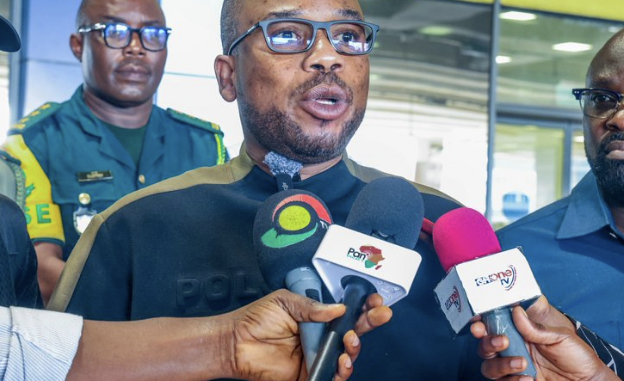
Emmanuel Akowuah Asamoah is a Ghanaian citizen who became the face of a renewed wave of xenophobic attacks in South Africa in 2026. A viral video showing him being harassed by South African youth sparked international outrage and forced the Ghanaian government to intervene. His story is not one of fame or political power. It is a story of survival, fear, and finally, safe return home. He is an ordinary citizen whose life was turned upside down by forces beyond his control. This is his story.
The Incident That Shook Two Nations
In late April 2026, a video began circulating on social media. It showed a Ghanaian man being harassed and threatened by a group of South African youth. The man was Emmanuel Akowuah Asamoah. The video was disturbing. It showed him being verbally abused, pushed around, and told to leave the country. The incident was part of a larger wave of xenophobic violence targeting foreign nationals in South Africa, particularly those from other African countries.
Tensions in South Africa had been rising for months. Unemployment was high. Many South Africans blamed foreign nationals for taking jobs and committing crimes. This anger had boiled over into street violence, looting, and attacks on foreign-owned shops. Emmanuel Asamoah was caught in the middle of this explosion of anger.
The video went viral across Ghana and South Africa. Ghanaians were outraged. Social media users demanded that their government act. They wanted Emmanuel brought home. They wanted answers. They wanted justice.
Government Intervention and Evacuation
The Ghanaian government acted quickly. Foreign Affairs Minister Samuel Okudzeto Ablakwa personally intervened. On April 25, 2026, the government announced that it would relocate Emmanuel Asamoah back to Ghana. The decision was made due to security concerns following the widespread circulation of the viral video that had exposed his identity.
According to Minister Ablakwa, the victim had been subjected to threats and online harassment after the incident. This prompted urgent intervention by the government. “We have taken the decision to relocate him and support his resettlement at full cost,” Ablakwa said. He added that the relocation destination would not be disclosed for security reasons.
The government also clarified important facts about Emmanuel. Investigations confirmed that he was a legal resident in South Africa. South African authorities officially verified that he had not violated any laws. “This gentleman is not an illegal migrant. He is law-abiding,” Ablakwa stressed. This was an important point. Some of the anti-foreigner rhetoric in South Africa specifically targeted undocumented immigrants. Emmanuel was not one of them.
Minister Ablakwa also revealed that South African authorities had issued an official apology and assured Ghana that an investigation would take place. Ghana’s High Commissioner was invited to a meeting with the South African Vice President, where further apologies were issued.
The Return Home
On May 5, 2026, Emmanuel Akowuah Asamoah arrived back in Ghana. He was accompanied by Ghana’s High Commissioner to South Africa, Benjamin Quarshie, who personally escorted him on the journey home. The Foreign Affairs Ministry confirmed his safe return and assured continued support for Ghanaians facing similar challenges abroad.
Minister Ablakwa made a public announcement welcoming Emmanuel home. On a Facebook post dated May 5, he wrote: “We are delighted to welcome back home from South Africa our dear compatriot, Mr. Emmanuel Akowuah Asamoah. I commend our High Commissioner to South Africa, His Excellency Benjamin Quarshie for accompanying our brother all the way. There is no place like home.”
The Minister added: “As we have already announced, Ghanaians who wish to be relocated back home should contact our High Commission to be assisted at the Government of Ghana’s expense. The Mahama Administration values every Ghanaian life anywhere in the world, and we shall never abandon our citizens in distress. Your welfare remains our utmost priority.”
Government Response to Xenophobia
The attack on Emmanuel Asamoah was not an isolated incident. It was part of a pattern. Minister Ablakwa expressed deep concern about recurring xenophobic attacks in South Africa. He noted that while apologies are often issued, perpetrators are rarely punished, allowing the attacks to continue.
“We are demanding swift investigations and sanctions to serve as a deterrent,” he said. The Minister warned that continued inaction could embolden more attacks, putting African migrants at risk. He stressed that Ghana would continue to engage South African authorities to ensure justice is served and such incidents are not repeated.
The government also announced an open-door policy for other Ghanaians in South Africa who felt unsafe. Those who wished to return home were instructed to contact the Ghana High Commission for assistance. The government promised to cover relocation costs. “The government is committed to ensuring the safety and dignity of Ghanaians abroad,” the Minister said.
Who Is Emmanuel Akowuah Asamoah?
Before the viral video, Emmanuel Akowuah Asamoah was not a public figure. He was a private citizen living and working legally in South Africa. Very little is known about his personal background. He has no political history. He is not a musician, actor, or celebrity. He was simply a Ghanaian man trying to make a living in another African country.
This is part of what makes his story so powerful. He could be anyone. He could be a neighbour, a cousin, or a friend. The attack on him was not personal. It was an attack on all foreign nationals. And his government’s swift response showed that Ghana protects its citizens, no matter where they are in the world.
What Happened to the Attackers?
As of this writing, there is no public information about arrests or prosecutions related to the attack on Emmanuel Asamoah. This is a common complaint about xenophobic violence in South Africa. Perpetrators are rarely held accountable. The South African government has condemned the attacks and promised investigations. But whether those promises will lead to actual justice remains to be seen.
Minister Ablakwa has made it clear that Ghana will keep pressure on South African authorities. But the legal process is slow. And Emmanuel Asamoah is now safe in Ghana. For him, the priority is rebuilding his life.
Personal Assessment
Emmanuel Akowuah Asamoah is not a hero in the traditional sense. He did not choose to become famous. He did not seek out danger. He was an ordinary person who suffered an extraordinary trauma. But his story has become a symbol.
He represents every African migrant who has been attacked or threatened in a foreign land. He represents the failure of African countries to treat each other with dignity. He represents the importance of government protection for citizens abroad. And his safe return shows that Ghana, at least, takes that responsibility seriously.
Emmanuel Asamoah is also a victim of a larger problem. Xenophobia in South Africa did not start in 2026. It has been happening for years. Every few years, a wave of violence breaks out. Foreigners are attacked. Their shops are looted. Some are killed. Then the violence fades, only to return again later. International outrage comes and goes. Nothing changes.
Emmanuel is lucky. He survived. He was evacuated. He is home. Many others are not so lucky. Many still live in fear in South African townships. Many have no government to rescue them. Many have no home to return to.
What Could Be Better
The situation that forced Emmanuel Asamoah to flee South Africa should never have happened. The South African government needs to do more to prevent xenophobic violence. Perpetrators need to be arrested, prosecuted, and punished. Apologies are not enough.
The African Union also needs to take a stronger stand. Xenophobia on the continent is a betrayal of the pan-African ideal. Africans should not be attacking Africans. But good intentions are not enough. There need to be consequences for countries that allow their citizens to attack foreign nationals.
For Emmanuel personally, the trauma of the attack will not disappear just because he is back in Ghana. He will need support. He will need counselling. He will need help rebuilding his life. The government has promised to support his resettlement. That promise must be kept.
Emmanuel Akowuah Asamoah did not choose to be in the public eye. He is a victim, not a politician or an activist. It would be unfair to rate him as a public figure because he never asked for this role. He is simply a person who survived a terrible experience.
But his story is important. It reminds us that xenophobia has real human consequences. It reminds us that governments have a duty to protect their citizens, even when they are far from home. And it reminds us that behind every viral video is a real person with a real life that has been disrupted or destroyed.
Conclusion
Emmanuel Akowuah Asamoah’s story is still unfolding. He is now back in Ghana, safe from the violence that forced him to flee. What he will do next is unknown. Will he stay in Ghana? Will he try to return to South Africa? Will he speak out about his experience? Only time will tell.
But one thing is certain. His face, captured in that viral video, will not be forgotten. He has become a symbol of the ongoing struggle against xenophobia in Africa. He has shown that even in the darkest moments, there is help. There is a way home. And there is a government that will not abandon its citizens in distress.
For Emmanuel, the hope is that he can now find peace. He has been through something no person should have to endure. He has been threatened, humiliated, and forced to leave the life he built. But he is home. He is safe. And slowly, he can begin to heal.
The last word belongs to Foreign Affairs Minister Ablakwa, who welcomed him with four simple words: “There is no place like home.”
FAQs About Emmanuel Akowuah Asamoah
1. Who is Emmanuel Akowuah Asamoah? He is a Ghanaian citizen who was attacked by South African youth during a wave of xenophobic violence in 2026. A viral video of the attack brought him international attention.
2. What happened to him in South Africa? He was verbally abused, harassed, and threatened by a group of South African youth. The incident was filmed and spread widely on social media.
3. Was he living in South Africa illegally? No. The Ghanaian government confirmed that he was a legal resident of South Africa and had violated no laws.
4. Did the Ghanaian government help him? Yes. Foreign Affairs Minister Samuel Okudzeto Ablakwa announced that the government would relocate him back to Ghana at state expense.
5. When did he return to Ghana? He arrived in Ghana on May 5, 2026, accompanied by Ghana’s High Commissioner to South Africa, Benjamin Quarshie.
6. Will the attackers be punished? South African authorities have promised to investigate, but as of this writing, no arrests or prosecutions have been publicly announced.
7. Is he the same person as the radio presenter Owuraku Asamoah? Possibly. There is evidence that a radio presenter named Emmanuel Asamoah (known on air as Owuraku Asamoah) worked at Rite 90.1 FM in Somanya, Ghana. However, it is not confirmed that this is the same person.
8. Is he related to the politician Emmanuel Asamoah Owusu-Ansah? No. That is a different person. Emmanuel Asamoah Owusu-Ansah was a Ghanaian politician who died in 2012.
9. What has he said about the attack? He has not made extensive public statements. The government described him as initially traumatised but cooperating with authorities.
10. Can other Ghanaians in South Africa get the same help? Yes. The government has announced that any Ghanaian in South Africa who wishes to return home due to safety concerns should contact the Ghana High Commission for assistance at government expense.