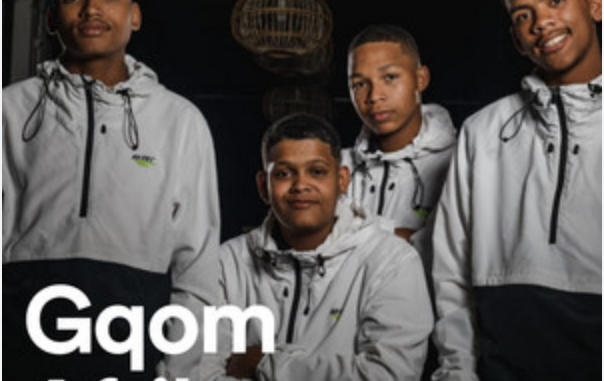
Afrikaans gqom has been a bringing silent surprise as one of the most promising underground streams in the South African music. This Cape-based development of the hard and bare drum strokes of the original gqom sound of Durban injects Afrikaans slang, township narrative and street identification into the formula.
Compared to amapiano, which takes over in mainstream charts, Afrikaans gqom spreads in different ways namely block parties, community events, WhatsApp posts, Tik Tok snippets, and self-released YouTube posts. It is unrefined, low-end, and local. We then deconstruct 10 of the leading artists in the movement and then move to 30 more artists that are building the culture down to the ground.
DJ Neeno
Among the most noticeable Afrikaans gqom DJs is DJ Neeno who has over 46,000 followers. He is known as an influencer in performance. Gqom is closely connected with the movement, and DJs will always be the pulse of that power. DJ Neeno is one of the key players in Cape dance culture because his sets incorporate heavy basslines with precision in reading the crowd.
Temple Boys CPT
Considering the number of followers (more than 85,000), Temple Boys CPT symbolize collective power. They are strong because they are united, that is to say, they brand together, release regularly, and have a distinct identity. They have incorporated Afrikaans gqom with hip hop sounds making them one of the most commercially conscious acts in the scene.
Luda G
Luda G with almost 50,000 followers combines the Afrikaans hip hop swagger with more somber gqom production. His vocal assurance and crossover ability make him a key bridge between genres. He demonstrates that Afrikaans gqom may not be confined to underground locations.
Mr Thela
Despite the fact that he was born within the original gqom movement of Durban it is due to the national and international recognition Mr Thela has gained over time that the regional variations of gqom such as the Afrikaans gqom have begun to receive awareness. His refined recording and career development give the roadmap on how underground sound can ascend.
Hunter Fam
Hunter Fam boasts more than 15,000 followers who prove that crew culture is valued in the Cape. Groups tend to be more mobile compared to individuals underground. The mutual drive, cooperation and cohesiveness are indicative of Afrikaans gqom.
Barkie Vieslik
With 11,574 followers, Barkie Vieslik is unapologetically gritty and lyrically speaking. His approach is all Cape Flats realism – crisp delivery in diminutive overlay on barebones bass-driven instrumentals.
NV Funk
Having more than 10,000 followers, NV Funk remains faithful to the original drum pattern of gqom but changes the flow and language to the Afrikaans crowds. He preserves the dark minimalism of the genre and makes the story localized.
TDV Ricky Vani Frontline
This act has a following of over 25,000, and it blends Afrikaans hip hop with gqom. The blend method provides him with more popularity and shows the versatility of the sound.
Meneer Cee
Meneer Cee brings about lyrical presence and maturity with 14,686 followers. This is proven in his work, which is not just high-energy dance tracks but can also have a narrative.
Luxury SA
Luxury SA has established good online consistency with 18, 581 followers. In the current music business, the expansion may front on internet interaction. His consistency makes him one of the consistent mid-tier forces in the scene.
These 30 artists are just starting to construct the culture bottom up:
- HozaClarkieBoy
- KnK Productions
- Rejx Entertainment
- Team Vosho
- Mr Werkhom
- Dlala Ikamva Badlalele Ikamva.
- Daii Kallit Laaitie
- Atie-G
- DSTREAKBOYS
- Brent no Krazy
- DxngerBoyz
- Miezzo
- Marco no Mlungu
- Innocent Boi’z
- Jabs CPT
- Boss Nhani
- Sister N
- Jixlove
- King Saiman
- Lil LK
- D2Ps
- Klein Fortuin
- Jashmir
- Dj Target no Ndile
- DikkieCPT
- Dj Diegoza
- GAKKIEMUSIC
- OfficialK13_SA
- Weh Sliiso
- Atie-G
These artists in some form or other are a part of the ecosystem of the genre, be it in terms of production, performance or local impact. Others are followed by thousands of people. Some are only beginning with double digits. However, the situation is different in underground music where development usually happens in a local scale before gaining national popularity.
Why Afrikaans Gqom Matters
Afrikaans had complicated political connotations in decades. However, in Cape context, it turns to be an instrument of street performance, humor, endurance and pride. Using the dark percussive structure of gqom, the musicians turn daily slang into club hymns. Afrikaans gqom survives on accessibility unlike other mainstream genres that are largely financed. Entry is made possible through home studios, cheap software and social media distribution. This reduces obstacles and makes the scene dynamic.
The Digital Platforms Role.
Short-form video apps and streaming platforms have increased the growth. One dance battle can bring a song outside a neighborhood. WhatsApp bands spread songs very fast. There is anticipation of youtube premieres. The examples of DJ Neeno, Temple Boys CPT or Luda G are the examples of how digital traction can be turned into the influence. In the meantime, new vendors such as GAKKIEMUSIC and OfficialK13SA indicate that the pipeline is open.
The Future of the Sound
Teamwork is perhaps the secret of growth. Interprovince characteristics between Cape Afrikaans artists and Durban gqom innovators may bring the sound to the national level. Festivals opportunities could be also opened by means of strategic partnerships, more powerful branding, and professional visuals. The prospective audience of electronic music is becoming particularly interested in localized subgenres at the international level. The cultural particularity and the dark minimalism of Afrikaans gqom make it exportable.
Afrikaans gqom does not represent a fad. It is a cultural movement which is based in bass, identity and community. The domination of the performances by DJ Neeno no matter how powerful they are, and the collective power of the Temple Boys CPT no matter how strong it is, the domination of the crossover appeal by Luda G no matter how more popular the range of emerging talent is, these 40 performers are all about momentum.
Some are established. Some are rising. All are contributing. And into so long as the bass thwarts in the Cape Flats, Afrikaans gqom will keep expanding – loud, local, and without apology South African.