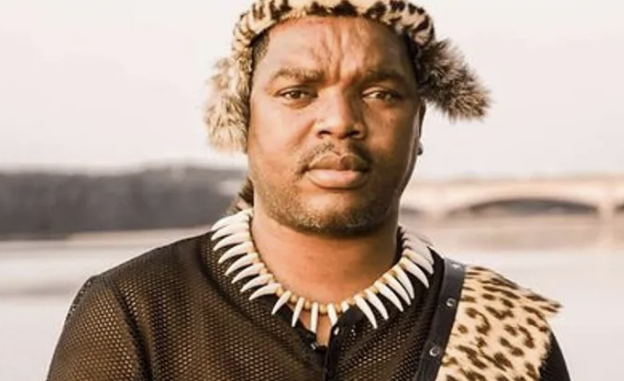
Ngizwe Mchunu is one of South Africa’s most polarising public figures. He is a former radio star, a traditional healer, the self-declared president of the Amabhinca Nation, and a controversial activist. His journey from the airwaves of Ukhozi FM to leading anti-immigrant marches has been anything but ordinary. He is known for his loud voice, his bold claims, and his willingness to clash with politicians, celebrities, and the law. To some, he is a fearless defender of Zulu culture and a champion of the poor. To others, he is a dangerous populist who spreads hate speech and xenophobia. This is his story.
Early Life and Education
Ngizwe Mchunu was born on December 5, 1980, in Nkandla, KwaZulu-Natal. Nkandla is a rural area that later became famous as the home of former president Jacob Zuma. Growing up there, Mchunu was surrounded by Zulu traditions and customs. He often speaks proudly of his roots.
One surprising fact about Mchunu is that he did not attend formal school. He has described himself as self-educated. He does not have formal qualifications. Instead, he learned through life experience and mentorship within the media industry. This lack of formal education is something his critics often point to. But Mchunu uses it to show that he is a self-made man who succeeded without a traditional schooling path.
He later attended the University of the Free State, though details about his studies there are not widely available.
Radio Career and Rise to Fame
Mchunu’s big break came when he joined Ukhozi FM. Ukhozi FM is the largest radio station in South Africa. It broadcasts in isiZulu and has millions of listeners across the country. Mchunu hosted programmes focused on Maskandi music and Zulu traditions. Maskandi is a genre of Zulu folk music that tells stories of daily life, love, and struggle.
Mchunu became very popular. His style was energetic and bold. He was not afraid to speak his mind or cause controversy. Some called him a shock jock because he said things that other radio hosts would not. His deep knowledge of Zulu culture made him respected among traditionalists.
But his time at Ukhozi FM came to an end in 2019. He was fired after allegedly breaching a confidentiality policy. The exact details of what he shared are not fully public. But the station accused him of making private station information public. It was a sudden and dramatic end to his broadcasting career.
Life After Ukhozi FM
Losing his job at Ukhozi FM did not silence Mchunu. Instead, he took his voice online. On September 14, 2019, he launched his own online radio station called Ngizwe Mchunu FM. It broadcast from 9am to 11pm. This allowed him to speak directly to his followers without the rules of a big corporate station.
During the COVID-19 lockdowns, Mchunu grew even more popular. He used social media platforms like Facebook and TikTok to reach younger audiences. He posted videos, made live broadcasts, and commented on everything from politics to celebrity gossip. His follower count grew rapidly.
In 2026, he reportedly joined the Podcast and Chill with MacG network. This is a popular South African podcast that interviews controversial and famous guests. It showed that Mchunu was still a relevant and in-demand media personality.
The Amabhinca Nation
Mchunu is the self-declared president of the Amabhinca Nation. Amabhinca refers to a traditionalist Zulu subculture. Members of this group are known for wearing animal skins and practicing traditional customs. They see themselves as guardians of Zulu heritage.
Mchunu uses this title to give himself authority. He speaks on behalf of traditional Zulu values. He wears traditional attire at public events. He argues that modern South African politics has forgotten traditional leaders and customs. By leading the Amabhinca, he positions himself as a voice for those who feel left behind.
However, critics say that the Amabhinca Nation is not a formal political party or recognised traditional authority. It is a loose movement built around Mchunu’s personality. But his followers are loyal. They see him as a chief or a king, even if the law does not.
Support for Jacob Zuma
Mchunu is a vocal supporter of former president Jacob Zuma. This support has caused him major legal trouble.
In July 2021, Zuma was sentenced to prison for contempt of court. He had refused to testify at a corruption inquiry. Before his arrest, Mchunu was seen on guard outside Zuma’s Nkandla homestead. He insisted that the former president would not go to jail.
After Zuma was imprisoned, violent unrest broke out in KwaZulu-Natal and Gauteng. Shops were looted. Property was destroyed. Over 300 people died. The government accused certain individuals of inciting the violence.
Mchunu was one of them. He was accused of instigating and urging others to commit theft and violence during a press conference in Johannesburg. He was charged with incitement to commit public violence.
On July 19, 2021, Mchunu handed himself over to the police. He appeared in court. The magistrate considered the evidence against him to be weak. However, he was considered a flight risk, so his passport was confiscated. He was released on bail. The case continued for years. Eventually, he was acquitted in November 2023.
After his acquittal, Mchunu became even more confident. He saw himself as a victim of political persecution. He argued that the state was wasting resources to prosecute anyone close to Jacob Zuma. This experience shaped his later activism.
The Polygamy Controversy
Mchunu has been married multiple times. He is a traditionalist who believes in polygamy, the practice of having more than one wife. However, his attempts at polygamous marriage failed in court.
South African law allows polygamous marriages under the Recognition of Customary Marriages Act. But there are rules. A man who wants to take a second or third wife must first apply to the court. The court must approve a written contract about how property will be shared between the wives.
Mchunu did not follow these rules. He married his first wife, Siphelele Nxumalo. He then took a second partner, Lindiwe Khuzwayo, and a third, Floda Mthimkhulu, also known as Nqobile Mthimkhulu.
His first wife took him to court in 2014 to nullify his marriage to his third wife. The court agreed. Both his second and third marriages were nullified because Mchunu had not followed the legal process.
This controversy embarrassed Mchunu. It showed that even on traditional marriage customs, he had not followed the law. His critics use this as evidence that he picks and chooses which traditions to respect.
Anti-Immigrant Activism and March and March
In recent years, Mchunu has reinvented himself as an anti-immigrant activist. He has aligned himself with a group called March and March. March and March is a citizen-led protest movement that calls for the removal of undocumented foreign nationals. They argue that immigrants are taking jobs, committing crimes, and putting pressure on public services.
Mchunu has become one of the most visible faces of this movement. He leads marches through city centres. He gives speeches calling for foreigners to leave. He claims that his movement is not violent. “We are just men, we are not violent and have done nothing wrong,” he said during a march in Durban. “We are not assaulting anyone, only criminals do that. We are saying all illegal immigrants must leave.”
On April 21, 2026, Mchunu led a march through the Durban CBD. He claimed the march was sparked by allegations that March and March members were assaulted during a clean-up operation. He said, “Political parties have failed the country and as citizens we will now take matters into our own hands.” He also insisted, “We will not break the law, and we do not want criminals to hijack what we are doing. We are cleaning our country.”
The march turned tense. Some protesters were reportedly assaulted. There was a standoff between Mchunu’s supporters and security guards believed to be employed by foreign nationals. Mchunu announced plans to take similar actions to Johannesburg and Pretoria.
In another protest in East London in March 2026, Mchunu called for unity between Zulus and Xhosas. He argued that both groups share common roots as part of the broader Nguni nation. He said, “We felt it was time for us to unite and fight what is happening in our country, where opportunities are being opened for people from outside to enter and live in South Africa illegally.”
That protest turned violent. A marcher was reportedly stabbed. Police fired rubber bullets to disperse crowds.
Critics call Mchunu’s activism xenophobic. They say his rhetoric incites violence against foreign nationals. He denies this. He says he is only targeting undocumented immigrants and criminals, not all foreign nationals. But the line is blurry. And his marches have been linked to attacks on foreign-owned shops.
Legal Troubles and Defamation Cases
Mchunu’s mouth has landed him in constant legal trouble. His most high-profile legal battle is with Julius Malema, the leader of the Economic Freedom Fighters (EFF).
In April 2026, Mchunu made explosive claims during an interview outside the Union Buildings in Pretoria. He alleged that Julius Malema received R60 million from Nigerian drug dealers. He also claimed that Malema was protecting illegal immigrants for political gain and was involved in criminal conduct.
Malema did not take these accusations lightly. His lawyers sent Mchunu a legal letter demanding a retraction, a public apology, and R1 million in damages. The letter gave Mchunu 24 hours to comply or face a lawsuit.
Malema’s lawyers called the statements “untrue, malicious and defamatory.” They said the allegations were “calculated to cause serious reputational harm” to Malema. They also argued that the comments were politically motivated ahead of upcoming local government elections.
Mchunu is also a known supporter of the uMkhonto weSizwe (MK) Party, a rival to the EFF. This adds a political layer to the conflict.
Beyond Malema, Mchunu has been investigated by the South African Human Rights Commission (SAHRC) over alleged hate speech. His comments targeting foreign nationals and the LGBTQI+ community have been found to violate equality laws in some cases. The Commission for Gender Equality has also criticised his remarks.
Reconciliation with Duduzile Zuma-Sambudla
Despite his many conflicts, Mchunu has also shown a willingness to reconcile. In November 2025, he appeared at the Durban High Court to support Duduzile Zuma-Sambudla, the daughter of former president Jacob Zuma.
This was surprising because Mchunu and Zuma-Sambudla had previously been enemies. In 2024, Mchunu had made a declaration prohibiting Shangaan people from campaigning in KwaZulu-Natal before the elections. Zuma-Sambudla was offended because her late mother, Kate Mantsho, was of Shangaan descent from Mozambique. She had insulted Mchunu in return.
But by November 2025, Mchunu said they had “buried the hatchet.” He came to support her because she was facing charges for allegedly inciting violence during the July 2021 unrest. He had faced similar charges and was acquitted. “I am here to support my sister,” he said. “The people who incited the violence know themselves; it cannot be, therefore, that they can arrest us because of ubaba (former president Jacob Zuma).”
He argued that the state was wasting resources. “It is a wasteful expenditure; it is a waste of state resources because it (the money used) does not come from them,” he said.
Personal Life
Mchunu is a father. He has four children. He is also a sangoma, a traditional healer. This role involves connecting with ancestors, performing rituals, and providing spiritual guidance.
He is known for his love of luxury. He has a collection of designer fragrances and luxury cars. This flashy lifestyle contrasts with his image as a man of the people.
Despite his controversies, he is also involved in mentoring young people from disadvantaged communities. He says he wants to help the next generation succeed where he did.
What Could Be Better
As a public figure, Mchunu has many weaknesses.
His confrontational and inflammatory style has led to legal trouble after legal trouble. Instead of focusing on constructive solutions, he often relies on shock value and controversy. This undermines the seriousness of the issues he claims to care about.
His anti-immigrant activism has been condemned by human rights groups and political leaders. Even when he insists his movement is not violent, his marches have been linked to assaults and property damage. Critics argue that his rhetoric fuels xenophobia, regardless of his intentions.
His legal troubles, including the defamation case from Malema and previous incitement charges, show a pattern of behaviour that keeps him in court rather than in productive political work.
His personal life, including the failed polygamous marriages, has also damaged his credibility. If he cannot follow the legal rules for traditional marriage, why should followers trust him to lead a political movement?
Rating
As a public figure: 5 out of 10
Mchunu is an effective communicator who has built a loyal following. His personal story is unusual and interesting. He has successfully brought attention to issues that mainstream politicians often ignore, such as the frustrations of unemployed youth and the pressures of undocumented immigration.
However, his methods are deeply flawed. His rhetoric often crosses into hate speech. His legal troubles are constant. He has not proven that he can translate his activism into real, positive change. For his supporters, he is a truth-teller. For his critics, he is a dangerous populist who inflames tensions for personal attention.
Conclusion
Ngizwe Mchunu has lived many lives. He has been a radio star, a traditional healer, a polygamist, a defendant, and a protest leader. His journey from the hills of Nkandla to the streets of Durban and Johannesburg is a very South African story. It is a story of ambition, controversy, culture, and conflict.
He loves Zulu tradition but breaks traditional marriage laws. He supports former president Zuma but attacks other political leaders. He calls for peaceful protests but leads marches that turn violent. These contradictions make him hard to understand and even harder to support fully.
But one thing is clear: Ngizwe Mchunu believes he is fighting for something. He believes he is fighting for the Zulu nation. He believes he is fighting for the poor. He believes he is fighting for a South Africa that works for its citizens first. Whether you agree with his methods or not, you cannot deny that he has a voice. And that voice is being heard.
FAQs About Ngizwe Mchunu
1. Who is Ngizwe Mchunu? He is a South African radio personality, traditional healer (sangoma), and activist. He is the self-declared president of the Amabhinca Nation.
2. When was Ngizwe Mchunu born? He was born on December 5, 1980, in Nkandla, KwaZulu-Natal.
3. Why was he fired from Ukhozi FM? He was fired in 2019 after allegedly breaching a confidentiality policy by sharing private station information publicly.
4. What is Amabhinca? Amabhinca is a traditionalist Zulu subculture. Mchunu claims to be its president. Followers wear animal skins and practice traditional customs.
5. Was he arrested for the July 2021 unrest? Yes. He was charged with incitement to commit public violence. He handed himself over to police on July 19, 2021. He was later acquitted in November 2023.
6. Is he married? He has been married multiple times. His first wife is Siphelele Nxumalo. His marriages to his second and third wives were nullified by a court because he did not follow legal procedures for polygamy.
7. What is March and March? March and March is a citizen-led protest movement calling for the removal of undocumented foreign nationals from South Africa. Mchunu has aligned himself with this movement.
8. Why is Julius Malema suing him? Malema is demanding a retraction, a public apology, and R1 million in damages after Mchunu claimed that Malema received R60 million from Nigerian drug dealers.
9. Is he a supporter of Jacob Zuma? Yes. Mchunu is a vocal supporter of former president Jacob Zuma. He was seen guarding Zuma’s Nkandla home before Zuma’s arrest in 2021.
10. What is his educational background? Mchunu has said he did not attend formal school and is self-educated. He later attended the University of the Free State.