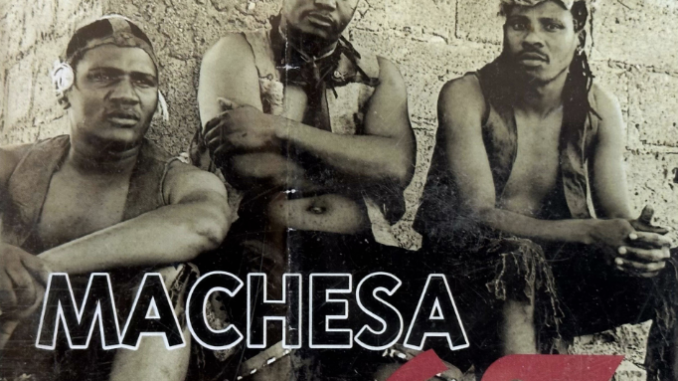
The Machesa Traditional Group is widely regarded as one of the most important and influential acts in the history of Setswana traditional music. Hailing from Botswana, this legendary trio later became a quartet and did not just make music. They changed an entire genre. From the release of their groundbreaking debut album Moselele in 2001 to their historic Kora All Africa Music Awards win in 2003, Machesa lifted Setswana traditional music from the villages and taxi ranks of Mahikeng to international stages and radio stations across Southern Africa. They dared to write original songs when everyone else was recycling old folk tunes. They criticised patriarchy when it was unpopular. They blended traditional rhythms with Christian gospel themes when no one thought it was possible. This is the story of the group that shook the foundations of Setswana music and inspired a generation.
Formation and Early Days
The Machesa Traditional Group was formed in Botswana in the late 1990s. The founding members were three working-class men: Dimane Lesetedi, Lebitso Galemmone, and Samuel Jack. The name Machesa was chosen to reflect their cultural roots and their ambition to bring Setswana traditional music to a wider audience.
At the time, Setswana traditional music was in a difficult place. South African groups largely determined the sound of the genre, leaving Botswana groups with little choice but to imitate. The music was seen as backward, old-fashioned, and irrelevant to younger listeners. Traditional group performances were mostly limited to weddings and local events. Selling music beyond one’s province or even town seemed impossible.
The music that did exist was mostly repackaged versions of old Setswana folk songs. Groups would listen to old tapes from Radio Botswana or Bophuthatswana Radio, learn the songs, and record their own versions. Original songwriting was rare. There was a general belief that Setswana traditional music was only about preservation, not creation.
But Machesa refused to accept these limitations. They were determined to do something different.
Eric Ramco Records and the Partnership
Behind every great band is often a great producer. For Machesa, that producer was Eric Ramogobya, known as Eric Ramco. Ramogobya was a frustrated advertising executive when he quit his job at the Botswana Guardian newspaper in 1995 to start Eric Ramco Records. His vision was bold: he wanted to properly archive and market Setswana traditional music, and he wanted artists to be fairly compensated for their work.
Starting a record label for a genre that was effectively non-existent was risky. Ramogobya had failed twice before in business. But he understood the potential of Setswana traditional music. From 1995 to the early 2000s, Eric Ramco Records was home to various artists, including Setswana folk singer Malefo Stampore Mokha. But the label struggled to gain traction. It mostly relied on Radio Botswana tapes, with little success or impact.
Then, in 2001, Ramogobya gathered Dimane Lesetedi, Lebitso Galemmone, and Samuel Jack to form Machesa. It was the partnership that would change everything.
The Debut Album: Moselele (2001)
In 2001, Machesa released their debut album, Moselele. The album sounded like a typical traditional music album on the surface. It was largely a modern interpretation of Tswana folklore. But the way it was released and marketed was different. Ramogobya pushed the album to a bigger audience through more modern distribution channels.
Moselele signalled a major arrival for Setswana traditional music. Until that moment, maskandi music was the most popular traditional genre in Southern Africa. Maskandi had become the voice of migrant workers in South Africa. But the arrival of Machesa challenged maskandi’s dominance. The album compelled international audiences to broaden their understanding of Southern Africa’s indigenous music traditions.
Some critics called Moselele a safe play. Judged by sound alone, it was Eric Ramco Records’ safest project. But judged by its reception and impact, it was revolutionary. The album catapulted Setswana traditional music to international stardom. It earned Machesa their first two Kora All Africa Music Awards nominations.
The album was also important for another reason. It showed that a group from Botswana, without white masters or major label support, could own their sound and succeed on their own terms.
The Sophomore Breakthrough: Tshipidi (2002)
If Moselele opened the door, Tshipidi kicked it down. The album was released in 2002 and would become a landmark in Setswana traditional music.
There is a famous story about how Tshipidi came to be. It is said that Ramogobya walked into the studio while the group was recording and declared that their days of listening to old tapes and remaking old Setswana folk songs were over. “The pen is mightier than memory,” he told them. Machesa would write original songs, or they would not record at all.
Critics warned Ramogobya that listeners were not ready to hear their precious Setswana language being upended. But Ramogobya and the group forged ahead. It did not take long for them to be vindicated.
Tshipidi was a departure from the lyrical caution of Moselele. It allowed Machesa to be more adventurous. The album included tracks that would become classics of the genre, including the title track Tshipidi, Rangapane, Re Machesa, Gama Ntene, Tautona, and Mmadikgomo.
The album was a commercial and critical success. It is still available on streets throughout North West province in South Africa nearly two decades after its release, stacked alongside sweets and chips in taxi rank stalls. A woman named Mmamoreki, who sells foreign exchange from a counter of old fruit boxes in Mahikeng’s biggest taxi rank, keeps stacks of Tshipidi CDs prominently displayed. On her less busy days, she explains the album’s magic to customers.
Sekopa and the Critique of Patriarchy
One of the most important tracks on Tshipidi was Sekopa. The song was a bold critique of patriarchy and lazy husbands. Its lyrics told the story of a recently married woman who is expected to perform all domestic duties while her husband spends most of his time drinking. The chorus went: “Ke sekopa / Setshoga phekela / Seye sepotong / Se batla dijo” which means “He is lazy / It wakes up early to go drinking / Comes drunk late at night / And wants food.”
Setswana traditional music groups had long been accused of being backward and of promoting patriarchy. This was one of the reasons for the genre’s long absence from mainstream platforms. But Machesa did not try to buck that trend. Instead, they offered a salient critique of it. Sekopa was a hit. It proved that traditional music could be both culturally authentic and socially conscious.
The Kora Award and International Recognition
In 2003, Machesa achieved what no Setswana traditional group had done before. They won the coveted Best Traditional Group award at the Kora All Africa Music Awards. The Koras were the most prestigious music awards on the African continent, recognising excellence across all genres.
Winning the Kora was a validation of everything Machesa and Eric Ramco had worked for. By this time, Setswana traditional music was a regular feature on radio and television. Ramogobya’s dream of taking the genre global had been realised.
The Third Album: Kora (2004)
Tshipidi had crowned Machesa and Ramogobya the kings of Setswana traditional music. Their third album, Kora, announced them as philosophers. The title, which shares its name with the All Africa Music Awards, was a statement of ambition and achievement.
Kora was both an appreciation album and a protest album. Having stormed their way to victory by discarding the old rules of traditional music, Machesa now set their sights on questioning society itself. They relied heavily on their songwriting skills to probe important cultural values and reckon with their contradictions.
The first shot in this clash was the controversial hit song Sango. In Sango, lead singer Dimane Lesetedi raised several issues using explicit language. Though they had won hearts with previous albums by choosing to avoid controversial topics, with Kora the group felt emboldened to raise issues including classism. They were praised as much as they were offended.
Jeso Morena: Bridging Tradition and Christianity
One of the most groundbreaking tracks on Kora was Jeso Morena. At a time when there was a general belief that themes of magic and witchcraft found in traditional music could never be reconciled with the heavenly longing of Christian music, Machesa begged to differ.
Jeso Morena was a four-minute appreciation sermon carried on an emphatic traditional music beat. It proved that the belief that traditional and gospel music could not blend was a false dichotomy. Until Kora, no other Setswana traditional music group had tried to balance the sensibilities of African spirituality and tradition with those of Christianity. Machesa showed that the two could coexist beautifully.
Live at BTV Amphitheatre (2005)
On September 11, 2005, Machesa descended on the BTV Amphitheatre in Gaborone, Botswana, to give one of their most memorable performances ever. The concert was recorded and later released as a live album.
The live album captured Machesa at the height of their powers. It included extended versions of their greatest hits, including Jeso Morena, Seponono, Moselele, and Mahala. The concert demonstrated that Machesa were not just studio artists. They were electrifying live performers who could hold an audience in the palm of their hand.
Later Albums
After Kora, Machesa continued to release music. Their album Rona….Dimane, Ditlhako le Manyoloi featured tracks like Mme o rile, Bonna bontsa, Pina ya thoriso, Gotchwe, Pitse, Mmamoratwa, and Tau. Songwriting credits on these later albums include Batsile Lesetedi, Keduetse Lesetedi, Max Lesetedi, Tumelo Mafoko, Gilbert MacKenzie, and Gofaone Mapitse.
But as the 2000s progressed, Setswana traditional music began to decline. A slew of influential artists had risen in Machesa’s wake, from Culture Spears to Shumba Ratshega. For a time, it seemed as though the genre was poised to challenge popular genres like gospel and hip-hop. But then it all went south.
No one can fully explain what happened. The most common answer fans give is that the music began to sound the same. Imitation replaced creativity. This is not an accusation that can be levelled at Ramogobya. He might be accused of many things, but not emulation. But when his work with Machesa lost its rhythm and the band left the label, the magic of that era was hard to recapture.
Legacy and Influence
Machesa’s impact on Setswana traditional music cannot be overstated. Before Machesa, the genre was seen as old-fashioned and irrelevant. After Machesa, it was modern, relevant, and capable of addressing contemporary social issues.
Their decision to write original songs was revolutionary. For years, South African groups had determined the sound of Setswana traditional music, leaving Botswana groups with little choice but to imitate. Machesa refused to follow this trend. By embracing original songwriting, they transcended tradition’s limitations and used their music to probe important cultural values.
Their influence spread across borders. For some of South Africa’s iconic Setswana traditional music groups, such as the Mahikeng-based Maletangwao Cultural Troupe Project, Machesa’s arrival meant a resurgence. Radio stations became suddenly responsive to requests from traditional groups to be playlisted because of what was happening in Botswana.
The group also had a profound impact on how traditional music was sold and distributed. When Machesa released Kora, struggling traditional musicians saw the boom and decided to sell music themselves. It took off right at home. Unlike other traditional music genres, Setswana artists did not have to wait for big stations in Gauteng to play their music for them to take themselves seriously.
Members and Contributors
The core members of Machesa were Dimane Lesetedi, Lebitso Galemmone, and Samuel Jack. Lesetedi was the lead singer and a primary songwriter. His powerful, distinctive voice became the signature sound of the group.
Songwriting credits on Machesa’s music involved several individuals. Eric Ramogobya, the label owner and producer, is credited as a composer on many tracks. Other composers and lyricists included Batsile Lesetedi, Ditlhako Lesetedi, Keduetse Lesetedi, Max Lesetedi, Tumelo Mafoko, Gilbert MacKenzie, and Gofaone Mapitse.
The later album Rona….Dimane, Ditlhako le Manyoloi featured an expanded lineup, as the title suggests including the Lesetedi brothers and other contributors.
The Eric Ramco Legacy
Eric Ramogobya, the man behind Eric Ramco Records, deserves significant credit for Machesa’s success. He was a frustrated advertising executive when he quit his job at the Botswana Guardian in 1995 to start his label. He had failed twice before in business. But he believed that Setswana traditional music could be successfully marketed to a broader audience.
When his work with Machesa lost its rhythm and the band left the label, Ramogobya did not give up. He gathered Liki Tselabem, Kgwasimo (now known as Morwa Tsankana), and Ditiro “DT” Leero and formed a new group called Matsieng. Matsieng quickly garnered acclaim, particularly for their songwriting. But even their vocal prowess and songwriting could not re-enliven Setswana traditional music the way Machesa had.
Today, the question Ramogobya dreads has returned: Can he popularise Setswana traditional music again? Whatever he creates now will always stand in the long shadow of the seismic impact of his work with Machesa.
Cultural Significance
Machesa’s music remains an important part of Setswana cultural heritage. Their songs are still played on radio stations in Botswana and South Africa. Their albums are still sold in taxi ranks. Their influence can be heard in the work of contemporary Setswana traditional artists.
The group proved that traditional music does not have to be static. It can evolve. It can address modern issues. It can critique society. It can blend with other genres. It can be both authentic and innovative.
They also proved that artists from smaller countries like Botswana could compete on continental stages. They won Kora awards. They were recognised across Africa. They took Setswana music to the world.
What Could Be Better
As a musical group, Machesa has a few areas where more information would be helpful.
Information about the group’s current status is unclear. When they left Eric Ramco Records and whether they have reunited or released new material since is not widely documented. Their streaming presence shows albums from 2018, but it is unclear if these are re-releases or new material.
The group’s individual members remain somewhat anonymous. While Dimane Lesetedi is known as the lead singer, little public information exists about their personal lives, backgrounds, or what they have done since the group’s peak years.
Their discography on streaming platforms is somewhat disorganised. Multiple versions of albums appear under different dates, and some tracks are mislabeled or duplicated. A comprehensive, authoritative discography would help new listeners discover their work.
Their international presence has not been maintained since the 2000s. While they remain well-known in Botswana and South Africa’s North West Province, they are largely unknown to global audiences. Expanded digital marketing and reissues could help change this.
Rating
As a musical group and cultural institution, Machesa Traditional Group receives a rating of 9 out of 10.
Machesa is one of the most important traditional music groups in Southern African history. They revolutionised Setswana traditional music, moving it from wedding performances to international award stages. They wrote original songs when everyone else was recycling old folk tunes. They critiqued patriarchy, questioned society, and blended traditional rhythms with gospel themes. They won Kora awards and inspired a generation of artists.
Their only weaknesses are the passage of time and the lack of comprehensive documentation about their members and current activities. But for anyone interested in Setswana music, African traditional music, or the power of cultural innovation, Machesa is essential listening.
Conclusion
Machesa Traditional Group changed the sound of Setswana music forever. Before them, the genre was stuck. After them, it soared. Three working-class men from Botswana, guided by a determined producer with a dream, proved that traditional music could be modern, relevant, and socially conscious.
They wrote songs that made people dance and think. They sang about lazy husbands and demanding wives. They blended ancestral rhythms with Christian praise. They won awards on continental stages. They took Setswana culture from the taxi ranks of Mahikeng to the world.
The music industry moved on. Imitation replaced creativity. The genre declined. But Machesa’s legacy remains. Their CDs still sit on counters in taxi ranks, waiting for a new generation to discover them. And when that generation listens, they will hear the sound of a revolution.
FAQs About Machesa Traditional Group
Who are the Machesa Traditional Group?
Answer: They are a legendary Setswana traditional music group from Botswana, known for revolutionising the genre with original songwriting and social commentary.
When was Machesa formed?
Answer: They were formed around 2001 under the management of producer Eric Ramogobya of Eric Ramco Records.
Who were the founding members?
Answer: The founding members were Dimane Lesetedi, Lebitso Galemmone, and Samuel Jack.
What was their debut album?
Answer: Their debut album was Moselele, released in 2001.
What is their most famous album?
Answer: Their critically acclaimed sophomore album is Tshipidi, released in 2002.
What awards did they win?
Answer: In 2003, they won the Kora All Africa Music Award for Best Traditional Group. They also received two Kora nominations for Moselele.
What is the song Sekopa about?
Answer: Sekopa is a critique of patriarchy and lazy husbands. It tells the story of a woman who does all the domestic work while her husband drinks.
Did they blend traditional and gospel music?
Answer: Yes. Their song Jeso Morena blended traditional Setswana rhythms with Christian gospel themes, proving that the two could coexist.
Where can I listen to their music?
Answer: Their music is available on streaming platforms including Deezer, Beatport, Apple Music, and Spotify.
Are they still active?
Answer: Their status is unclear. Their albums are still available on streaming platforms, but it is not known if the original group still performs or records together regularly.
Would you like me to write another biography of a different musical group or artist in the same plain text format?