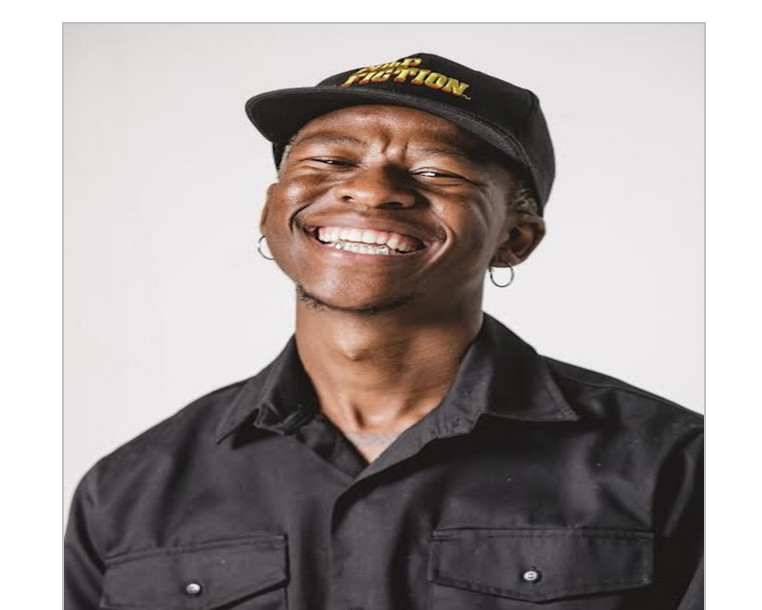
If you ever listened to a South African hip-hop song and felt like someone was telling you the truth, not just rapping at you, you might have been listening to Bravo Le Roux. He was not the loudest rapper in the room. He was not the flashiest. But his words hit different. They landed. They stayed with you.
His real name was Sinesipho Peter . He was born on July 11, 1995, in the Eastern Cape and grew up in Khayelitsha, Cape Town . Khayelitsha is one of the biggest townships in South Africa. It is a place where people work hard, struggle hard, and dream hard. Bravo was one of those dreamers. And he turned his dreams into music that the whole country could feel.
How He Got His Start
Bravo did not always know he was going to be a rapper. He grew up in a matriarchal household, which means the women in his family were the leaders. And in that house, people listened to gospel music . That was the soundtrack of his early life. But outside the house, in the barbershops and on the streets of Khayelitsha, he heard something else. He heard Xhosa hip-hop. And he loved it.
Before music became his job, he worked a 9-to-5 job at a butcher’s shop in Cape Town . He was just trying to make ends meet. But there was a problem. He was not making music. He was not painting. He was not dancing. He was not doing any of the creative things he loved. And that neglect drove him into a deep depression that lasted for years .
He said he used to model, paint, dance, and play sports in school. He did all the cool things that cool people did. But after he quit all of that, he fell ill and got depressed . That is when he turned back to music. At first, it was just a hobby. Something to keep his mind busy. Something to help him feel like himself again.
In 2018, things started to change. He was invited to perform at Nasty C’s Ivyson Tour in Cape Town . Nasty C is one of the biggest rappers in South Africa. Being on that stage put Bravo in front of thousands of people who had never heard of him before. And they liked what they heard. From there, business deals started to come in. Industry giants took notice. And Bravo finally got the life he had always dreamed of .
The Sound That Made Him Different
Bravo Le Roux did not sound like anyone else. He rapped in isiXhosa, his mother tongue. But he also mixed in Afrikaans and English street slang . That blend made his music feel like home to people from the Western Cape townships. It was familiar. It was real. It was theirs.
He started as a trap artist. That is the kind of hip-hop with heavy beats and fast hi-hats. But over time, he evolved. He became a storyteller . He intentionally started producing music that heals the soul . That is not something a lot of rappers say. Most of them want to make you dance or make you feel tough. Bravo wanted to make you feel something deeper.
He was heavily influenced by Xhosa rappers who came before him. He listened to them at the barbershop when he was a kid. And those sounds helped shape his unique style . He once said, “Xhosa rap was always in the streets, it was always hot, it’s what made me, it’s what got me out of the hood, and it’s what feeds my family” .
One of the things that made him stand out was that he did not drink alcohol and he did not smoke . He called himself a “township bru” who chose “clean fun” over the “trap life” . He had a fierce work ethic. And he stayed focused on his craft.
The Albums and the Hits
Bravo released his debut EP called “Ndingu Ta Bravo Kuwe” during the pandemic . That EP came with a series of music videos that helped him shine. People started calling him the next king of Cape Town. His debut album, “Igazi, Iinyembezi Nombilo,” came out in 2023 . The title means “Blood, Sweat, and Tears.” And that is exactly what the album was about. It was a raw, unfiltered map of his journey. Where he came from. What he went through. How he survived.
The album featured big names. He worked with Sjava, who is a huge star in South Africa. He said that Sjava sang his songs word-for-word to him before being featured on the album . That moment meant a lot to Bravo. It showed him that his music was reaching people he looked up to.
One of his biggest songs was “Umntu,” which means “a person” in Xhosa. That song went gold . Going gold is a big deal. It means the song sold a lot of copies. It means people were not just listening. They were buying. They were supporting. Another hit was “Makhwenkwe,” which captured the struggles and resilience of township life . He also had songs like “Suxoka,” “Amandla,” “Idini,” “War Cry,” “Kumkiwe,” and “Yabo?!” featuring YoungstaCPT . Each track was a piece of his story.
In 2024, he released a deluxe version of “Igazi, Iinyembezi Nombilo” and another album called “International Gubevu” . “Gubevu” became the name for his fans. They called themselves the International Gubevus . That is how much they loved him.
In 2025, he kept going. He released a single called “Bathini Ngam?” with Priddy Ugly in May . And he was working on a collaboration with Zolani Mahola, the legendary singer from Freshlyground . That song was called “XhosaNostra,” and fans were excited about it. It was supposed to come out in 2026.
The Collaborations That Mattered
Bravo worked with a lot of other artists. He was not the kind of rapper who kept to himself. He believed in building bridges. He worked with Ifani, Dee Koala, YoungstaCPT, Yanga Chief, Maglera Doe Boy, and Priddy Ugly .
One of his most important collaborations was with producer Shaney Jay. Together, they made tracks like “Yabo?!” featuring YoungstaCPT, “Which One?,” and “Bathini Ngam” . Shaney Jay is a gold-selling producer who shaped a lot of the modern South African sound. He said that Bravo was one of the most talented artists he had ever worked with .
Bravo also worked with iFani and Bhut’Legend on a tribute song called “Imali” after his passing [citation:previous]. That song featured a verse Bravo had already recorded. It was a way of keeping his voice alive.
The Xhosa Pride
Bravo was proud of being Xhosa. That is not something every rapper says out loud. Some people used to think that rapping in Xhosa would not sell. They thought English was the only way to make it. Bravo proved them wrong.
He said, “Xhosa rap was always in the streets, it was always hot” . He was excited to see more Xhosa rappers emerging from all over the country. And he predicted that Xhosa rap would take over hip-hop .
He was a cultural architect, not just a musician . He curated the heartbeat of the modern township. He made the dialect of the Western Cape townships both fashionable and universal . That is a big achievement. He took something that some people looked down on and made it cool.
He was also a shareholder in the Cape Spring Experience by late 2025 . That was him moving from being just a performer to being a partner. He was making history for independent artists .
The Hard Truth About His Struggles
Even though Bravo was successful, he still had hard days. He had talked openly about his depression. He said that neglecting his creativity made him sick. It made him depressed . That is an honest thing for anyone to say, especially a rapper. A lot of people in hip-hop pretend to be tough all the time. Bravo did not do that. He told the truth about his pain.
On January 22, 2026, Bravo Le Roux died in Switzerland at the age of 30 . He was visiting a friend. His wife, Sabrina Peter, who is known as DJ Sab, is from Switzerland . The family later confirmed that he died by suicide .
It was a shock to everyone. His family announced the news on his Instagram page on January 23 . They said, “It is with deep sorrow that we confirm the passing of Bravo Le Roux, a beloved South African artist whose talent, voice and spirit touched countless lives across the world” .
The family had to raise money to bring his body back to South Africa. The costs were around R500,000 . His wife launched a GoFundMe campaign. Fans and fellow artists donated to help. A memorial service was held on February 5 at OR Tambo Hall in Khayelitsha . People came from all over to say goodbye.
His passing started conversations about mental health in South Africa’s creative spaces . It reminded everyone that artists face unseen battles. That success does not always mean happiness. That even someone who looks like they have it all can still be hurting inside.
What People Said About Him
After he passed, the tributes poured in. Priddy Ugly, another South African rapper, said, “I’m lost for words. Sincere condolences to the family and loved ones. Rest In Power” .
Producer Shaney Jay wrote on Instagram, “All of this still feels unreal. You were a real one, my G, one of the most talented artists I’ve ever worked with, for real. Grateful to have made so many great songs with you, brother. Your energy is already missed on this side”. The Minister of Sport, Arts and Culture, Gayton McKenzie, said that Bravo “did not create for attention alone. He created to reflect life as it is” .
His family remembered him as a devoted father, a loving son, and a gifted creator whose spirit touched lives far beyond the borders of South Africa . He left behind his wife, DJ Sab, and his young daughter .
Why His Story Matters
Bravo Le Roux matters because he was real. He did not pretend to be someone he was not. He rapped in Xhosa when people said it would not sell. He talked about depression when people wanted him to act tough. He stayed true to Khayelitsha even when he made it big.
For kids who love music, his story is a reminder that your voice matters. The language you speak at home. The stories from your neighborhood. The struggles you have been through. All of that can be art. All of that can touch people.
But his story is also a reminder about mental health. It is okay to not be okay. It is okay to ask for help. It is okay to talk about what you are feeling. Bravo talked about his depression. But sometimes talking is not enough. Sometimes people need more support. If you are struggling, tell someone. A parent. A teacher. A friend. You do not have to go through it alone.
Bravo Le Roux left behind a legacy of authentic Xhosa artistry . He proved that township talent can stand confidently on any stage in the world without ever losing its identity . He was a voice for the voiceless. A storyteller for the people. And even though he is gone, his music lives on.
The International Gubevus will keep listening. They will keep celebrating his life. And they will remember that he was more than a rapper. He was a father. A husband. A son. A friend. And a truth-teller until the very end.
Rest in Power, Ta Bravo. Your voice will echo on.